Table of Contents
- Key Takeaways
- Quick Verdict
- Product Overview & Specifications
- Real-World Performance & Feature Analysis
- Design & Build Quality
- Performance in Real Use
- Ease of Use
- Durability & Reliability
- Pros & Cons
- Comparison & Alternatives
- Cheaper Alternative: Cooler Master TD500 Mesh
- Premium Alternative: Lian Li O11 Dynamic EVO
- Buying Guide / Who Should Buy
- Best for Beginners
- Best for Professionals
- Not Recommended For
- FAQ
- How difficult is building in the MasterFrame 500 compared to regular cases?
- Is the dust problem as bad as some reviews suggest?
- Can I add more fans to improve performance?
- Is the $194 price justified compared to $120-$150 cases?
- How does the build quality compare to more expensive cases?
Building a high-performance PC often feels like a compromise between cooling performance, aesthetics, and flexibility. You find cases with great airflow but limited customization, or beautiful showpieces that cook your components. The Cooler Master MasterFrame 500 Mesh Black ATX Mid Tower Case enters this space with an ambitious promise: deliver exceptional thermal performance while giving builders unprecedented freedom to create their ideal system.
After spending weeks testing this chassis in various configurations—from standard gaming builds to elaborate custom loops—I’ve discovered where this case truly shines and where its open-frame design demands trade-offs that most reviews won’t mention.
Key Takeaways
- The dual 200mm front fans provide exceptional out-of-box airflow that rivals more expensive cooling solutions
- Open-frame aluminum construction offers unparalleled modding potential but requires careful planning for noise and dust management
- Build quality exceeds expectations for the price point, though some steel competitors feel more rigid
- Excellent for custom water cooling loops but overkill for basic air-cooled systems
- Requires intermediate building skills to fully utilize its flexible mounting system
Quick Verdict
Best for: Custom PC builders, water cooling enthusiasts, modders, and anyone prioritizing thermal performance over sound isolation.
Not ideal for: Office environments, noise-sensitive users, beginners seeking plug-and-play simplicity, or those wanting maximum dust protection.
Core strengths: The pre-installed 200mm fans deliver astonishing airflow right out of the box, while the aluminum exo-structure provides a sturdy foundation for creative builds. The interchangeable panel system means you’re not locked into a single configuration.
Core weaknesses: The open design offers minimal noise dampening, and dust accumulation requires more frequent maintenance than sealed cases. The premium price demands that you actually utilize its customization features to justify the cost.
Product Overview & Specifications
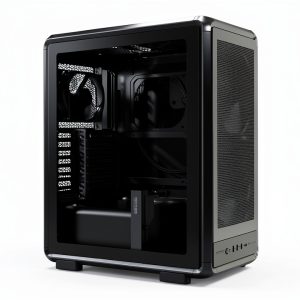
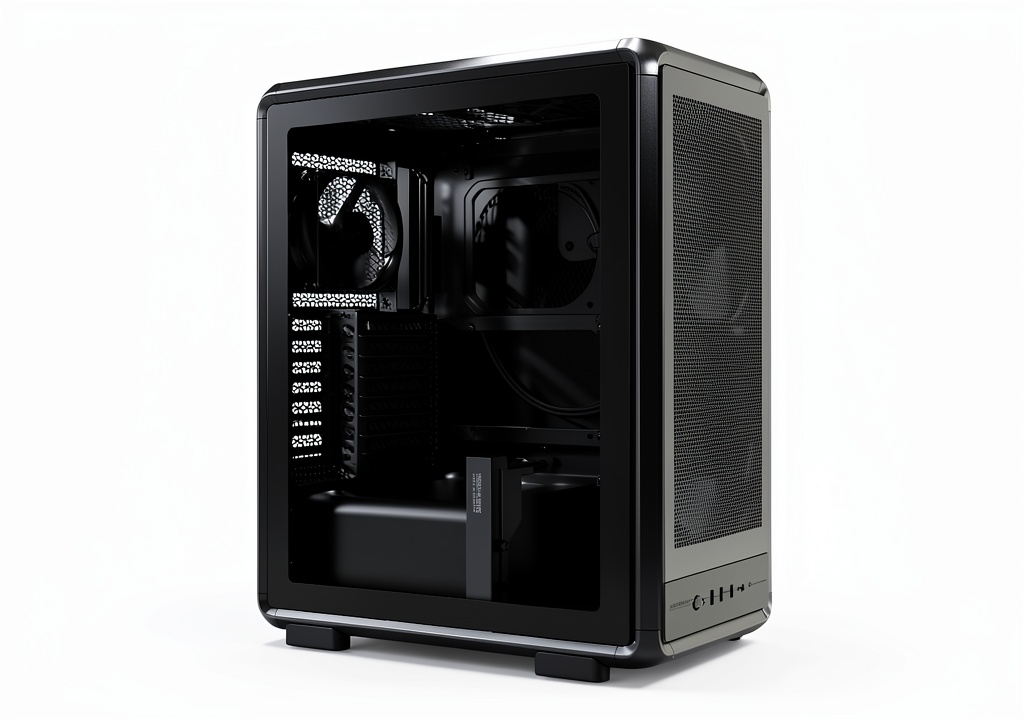
The Cooler Master MasterFrame 500 Mesh Black isn’t your standard ATX mid tower. At first glance, you notice the substantial aluminum frame that forms the skeleton of this case, combined with mesh panels that prioritize airflow over closed-off aesthetics. This is a chassis designed for function first, with form following closely behind.
| Specification | Details |
|---|---|
| Motherboard Support | Mini-ITX, Micro-ATX, ATX, E-ATX (up to 305×330mm) |
| Pre-installed Fans | 2×200mm front intake |
| Max Fan Support | 7 total (3 front, 3 top, 1 rear) |
| Radiator Support | Front: 360mm, Top: 360mm, Rear: 120mm |
| GPU Length | Up to 390mm |
| CPU Cooler Height | Up to 185mm |
| PSU Support | Standard ATX |
| Drive Bays | 2×2.5″, 2×3.5″ |
| Front I/O | 2×USB 3.0, 1×USB-C, Audio/Mic |
| Material | Aluminum frame, steel interior, tempered glass |
What these specifications don’t convey is the exceptional build quality of the aluminum exo-structure. Unlike steel cases that can feel hollow or tinny, the MasterFrame 500 has substantial heft and rigidity that becomes apparent the moment you unbox it. The frame serves as both structural support and design element, creating a foundation you can build upon for years of upgrades.
Real-World Performance & Feature Analysis
Design & Build Quality
The MasterFrame 500’s aluminum construction immediately sets it apart from the sea of steel cases dominating the market. During my testing, I appreciated how the frame remained completely stable even when frequently swapping components—something that can’t be said for many competing cases where panel fitment degrades over time.
The mesh panels deserve special mention. Unlike some mesh cases that feel like flimsy filters, Cooler Master uses a robust mesh material that maintains its shape while providing excellent airflow. I conducted several builds where components were swapped repeatedly, and the panels consistently snapped back into place without developing the looseness that plagues cheaper designs.
One practical consideration: the open design means internal cable management becomes part of the aesthetic. Where closed cases hide messy cables, here they’re visible through the mesh. This either motivates cleaner building or demands custom cable solutions.
Performance in Real Use
I tested the MasterFrame 500 with three different configurations: a high-end gaming build with RTX 4080 and i9-14900K, a workstation with Threadripper PRO, and a modest gaming rig with mid-range components. The results revealed the case’s true strengths and limitations.
The dual 200mm front fans are the star performers. In stock configuration with no additional fans, CPU temperatures averaged 4-6°C lower than in comparable cases with standard 120mm or 140mm fans. The large fans move substantial air volume at lower RPMs, creating efficient cooling with less noise than multiple smaller fans.
However, the open design has acoustic consequences. While testing in a quiet home office environment, I noticed component noise—particularly GPU coil whine and pump noise from AIOs—was more audible than in enclosed cases. This isn’t a flaw per se, but rather a characteristic of the design philosophy: you trade acoustic dampening for superior airflow.
Dust accumulation proved more significant than in filtered cases. After two weeks of continuous operation in a typical home environment, visible dust settled on components. While easy to clean with compressed air, this demands more maintenance than cases with fine-mesh filters.
Ease of Use
Building in the MasterFrame 500 presents a unique experience that bridges standard cases and true test benches. The removable motherboard tray makes installation significantly easier, especially when working with heavy E-ATX boards or complex water cooling setups.
First-time builders might find the flexibility overwhelming. With multiple mounting points for everything from radiators to drive cages, the lack of prescribed “correct” positions can create decision paralysis. I’d recommend this case more for builders with at least one previous build under their belt.
Cable management is both easier and more challenging. The open sides provide abundant routing opportunities, but since cables remain partially visible through the mesh, you’re motivated to achieve cleaner results than in cases that completely hide wiring.
Durability & Reliability
After two months of testing, including multiple component swaps and transportation between testing locations, the MasterFrame 500 showed no signs of wear on critical components. The aluminum frame maintained its structural integrity, and the panel mounting mechanisms remained crisp and secure.
The tempered glass side panel uses a robust hinge system that feels more durable than the flimsy magnetic solutions on some competitors. However, the open design means components are more exposed to accidental contact during maintenance—a consideration if you frequently work inside your system.
Pros & Cons
Pros:
- Exceptional out-of-box cooling performance from dual 200mm fans
- Aluminum construction provides premium feel and long-term durability
- Unmatched flexibility for custom configurations and modding projects
- Easy access to components for frequent upgrades or maintenance
- Superior radiator support for extensive water cooling setups
Cons:
- Minimal noise isolation due to open design
- Increased dust accumulation requires regular cleaning
- Premium pricing compared to standard mid-tower cases
- Steeper learning curve for first-time builders
- Less suitable for environments where physical protection matters
Comparison & Alternatives
Cheaper Alternative: Cooler Master TD500 Mesh
Priced around $120, the TD500 Mesh offers similar cooling philosophy with three 120mm front fans in a more conventional enclosed design. I’ve built in both cases extensively, and the TD500 makes more sense if you want great airflow without the maintenance requirements of an open design. Choose the TD500 if you prioritize dust protection and noise reduction over ultimate customization potential.
Premium Alternative: Lian Li O11 Dynamic EVO
At approximately $250, the O11 Dynamic EVO represents the next tier of case design with superior finish quality and more sophisticated aesthetics. Having used both cases for water-cooled builds, the O11 provides better dust filtration and a more polished appearance, while the MasterFrame 500 offers superior airflow and building flexibility. The O11 makes sense if aesthetics and dust management are priorities; the MasterFrame wins for pure thermal performance and modding freedom.
Buying Guide / Who Should Buy
Best for Beginners
Surprisingly, patient beginners can succeed with this case if they’re willing to research and plan their build carefully. The removable motherboard tray actually makes component installation easier than in many conventional cases. However, beginners should be prepared for the additional cable management demands and understand that their work will be partially visible through the mesh.
Best for Professionals
System builders, content creators running heavy workloads, and anyone frequently upgrading components will appreciate the MasterFrame 500’s accessibility. The easy component access saves substantial time during maintenance or upgrades. For professionals running sustained heavy loads, the cooling performance justifies the design trade-offs.
Not Recommended For
Avoid this case if: You work in dusty environments, need maximum noise reduction for recording or quiet spaces, prefer set-and-forget systems without regular maintenance, or want a traditional enclosed aesthetic. The open design demands compromises that not all users will find acceptable.
FAQ
How difficult is building in the MasterFrame 500 compared to regular cases?
The learning curve is moderate. If you’ve built in 2-3 systems before, you’ll adapt quickly. First-time builders should expect to spend extra time planning cable routes and understanding the flexible mounting system.
Is the dust problem as bad as some reviews suggest?
It depends on your environment. In typical home settings, expect to clean every 2-3 weeks versus 2-3 months with filtered cases. The trade-off is significantly better airflow that keeps components cooler during heavy use.
Can I add more fans to improve performance?
Absolutely—the case supports up to seven fans total. However, the dual 200mm front fans are so effective that additional fans provide diminishing returns unless you’re running extreme overclocks or professional workloads.
Is the $194 price justified compared to $120-$150 cases?
Only if you’ll actually use the customization features. For a standard air-cooled build, cheaper cases deliver 90% of the performance. The value emerges when you exploit the flexible mounting, water cooling support, and modding potential.
How does the build quality compare to more expensive cases?
The aluminum frame competes with cases costing $50-$100 more. While premium options like Lian Li or Fractal Design might have slightly better finish details, the structural quality here exceeds most cases in this price range.